Jubo Healthcare Platform
Built frontend modules for a healthcare dashboard used in senior care facilities. Collaborated with designers and nurses to streamline medical record input, reduce cognitive load, and improve patient data visibility across devices.
- Client :
- Jubo
- Role :
- Frontend Developer
- Year :
- 2024
- Duration :
- 8 months
skills
 HTML
HTML CSS
CSS React
React TypeScript
Overview
A health tracking tool built for rural caregivers, grounded in real care routines and daily use.
The Jubo healthcare platform is created for elderly residents in rural Taiwan, where access to medical services is often limited. It pairs wearable devices with routine caregiver check-ins to deliver ongoing, personalized care. In this project, I worked on building the part of the system that helps caregivers track and report what they observe during home visits.
My Role
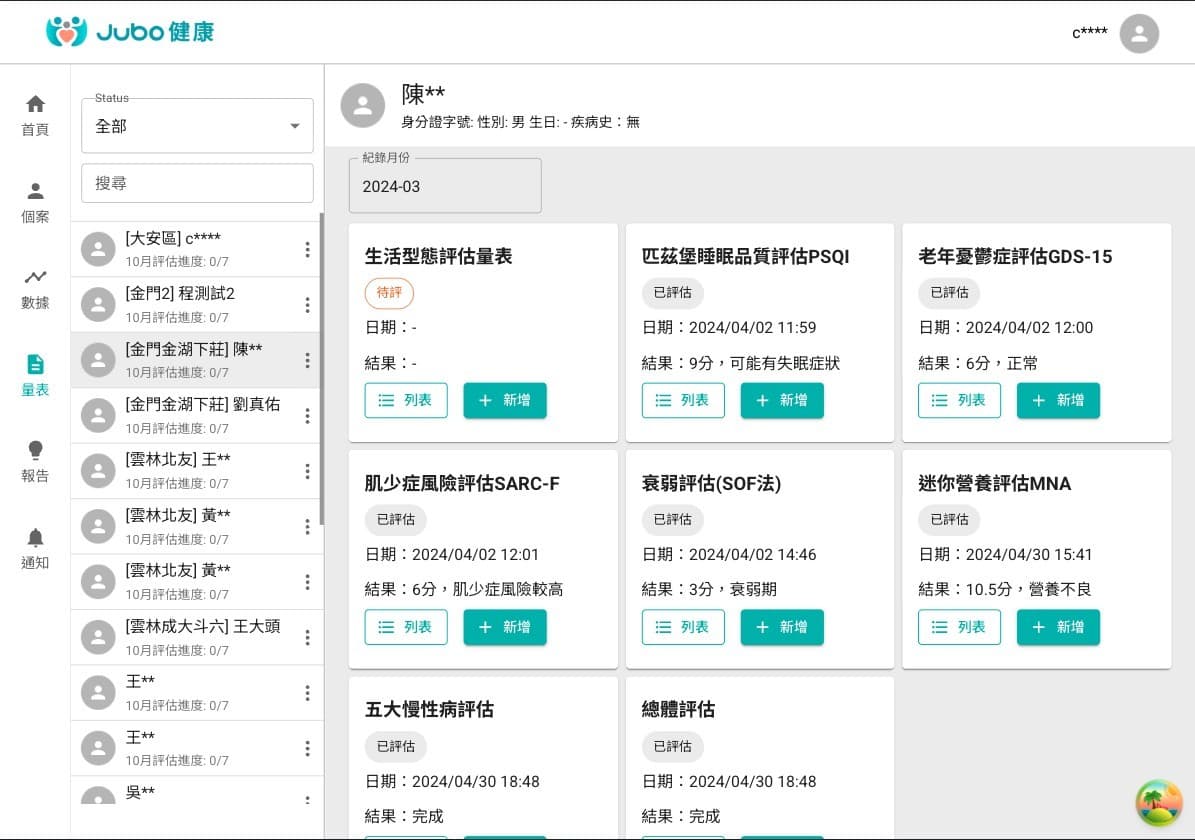
My focus was the design and implementation of the metrics and feedback interface. I developed nine streamlined health assessment forms and one comprehensive evaluation form using React with Material-UI. To manage state cleanly across form sessions, I used Zustand and React hooks like useState and useEffect to ensure each visit started with a fresh state.
Development Process
Agile Workflow & Iteration
Shaped by real caregiver feedback, week by week
Beyond just building forms, I played a key role in bringing user feedback into our development cycle. We worked in weekly sprints, continuously refining the interface and function based on real input from caregivers. Each round of updates reflected how the tool was actually being used in the field, which helped us stay responsive and make meaningful improvements week by week.
Data Visualization
Helping caregivers notice what matters
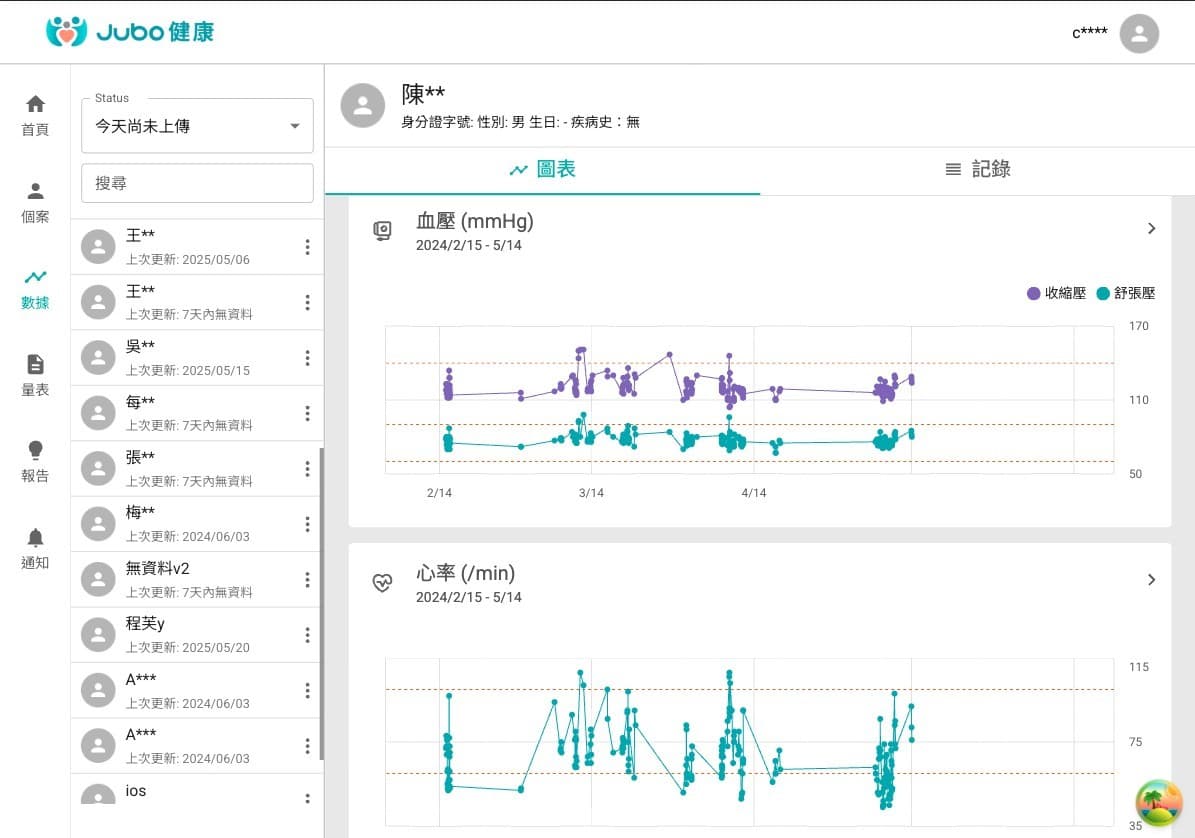
To help caregivers and researchers quickly spot trends, I integrated Recharts to visualize data like sleep hours, heart rate, and blood pressure. The goal was to make the data instantly readable, so caregivers could catch important trends at a glance, even during a quick check-in.
Reflection
This project taught me how to quickly adapt to the fast, iterative rhythm of agile development. At first, I felt a bit overwhelmed by the weekly sprint cycles, but I soon realized how valuable they were for building something that actually worked for real people, and I gradually became comfortable with the pace.
Constantly gathering feedback, testing ideas, and refining small pieces over time helped us stay aligned with users’ needs and avoid overbuilding. In the end, I gained more than just technical experience but also developed a stronger understanding of user-centered design and how it fits into real-world development cycles.
Beyond just building forms, I played a key role in bringing user feedback into our development cycle. We worked in weekly sprints, continuously refining the interface and function based on real input from caregivers. Each round of updates reflected how the tool was actually being used in the field, which helped us stay responsive and make meaningful improvements week by week.